Quick answer:
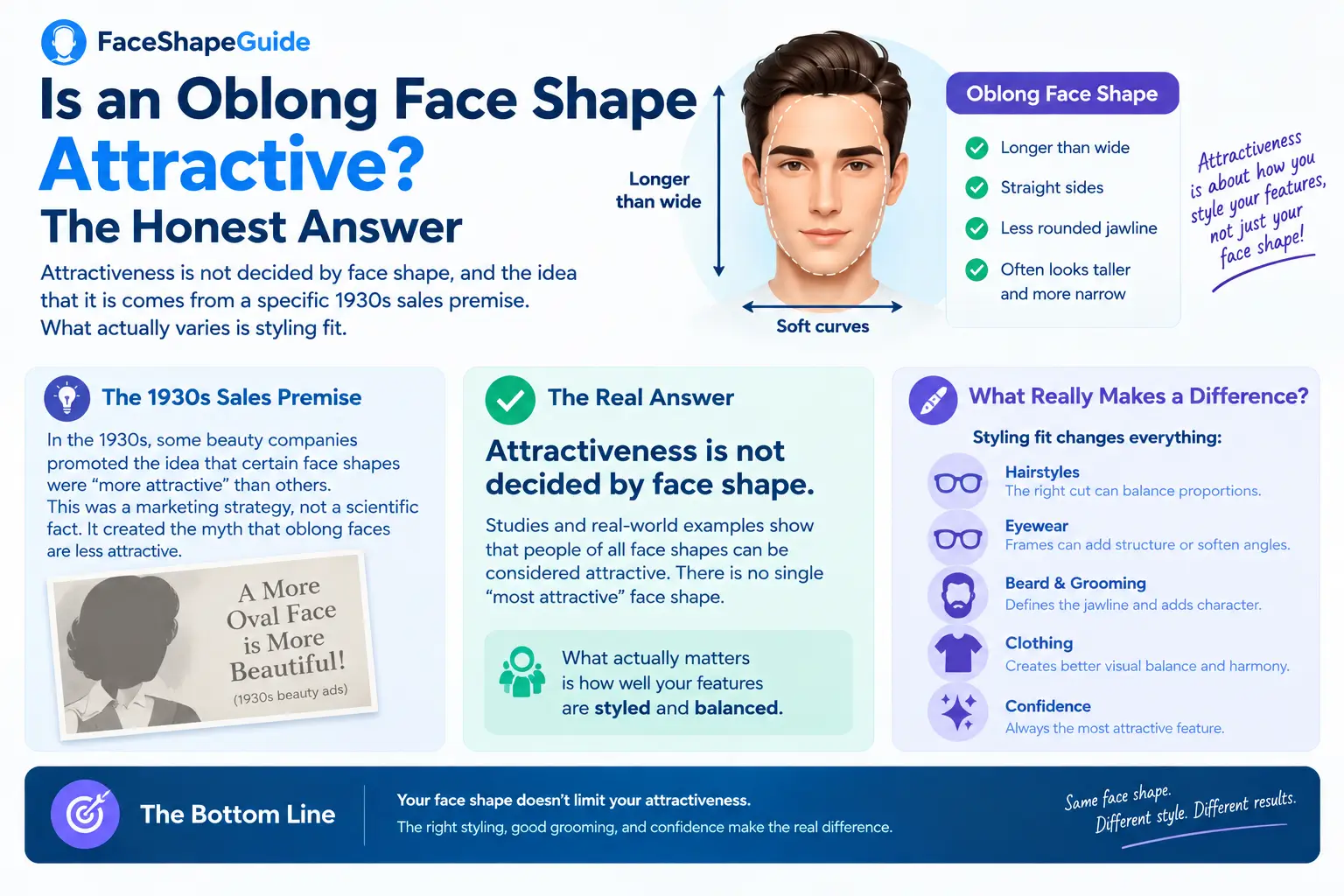
Yes, in the same sense that every face shape is, which is to say the question itself rests on an assumption worth questioning rather than accepting. No face shape is more or less attractive than another as a category.
Attractiveness is shaped by proportion, symmetry, skin, expression, and a long list of individual features that vary enormously within every single face shape group, not by which of eight width and length categories your face happens to fall into.
What genuinely does vary by face shape is which styling choices suit it, which is a different and much more useful question than the one usually being asked.
Where the question comes from
It is a reasonable question to have, and it is worth answering why it even gets asked. Face shape categories were built in 1930s Hollywood makeup departments around a specific premise: that faces should be styled to look more oval, because oval was treated as the ideal shape from the outset.
That premise is why oval still gets called ideal in styling content today, and why every other shape, oblong included, tends to get framed as something that needs correcting toward it. The full history is on the face shape chart page.
That framing was a sales tool, not a finding. No study measured oval faces as more attractive and then built a system around the result. The system decided oval was the target first, and the language around every other shape followed from that decision.
An oblong face being described as needing correction inherits that assumption rather than reflecting anything actually measured about attractiveness.
What actually varies by face shape
Not attractiveness. What varies is which specific styling choices flatter which proportions, which is a genuinely useful question this site answers in detail:
- Hairstyles for an oblong face, which add width at the sides rather than height at the crown
- Glasses, where wider frames with depth suit this shape particularly well
- Well-known examples commonly described as having this shape, covered on the oblong celebrities page, who exist across a wide range of features and looks despite sharing one proportion category
None of that is about correcting anything. It is about knowing what tends to balance a specific set of proportions, which is a design question, not a verdict on how you look.
The honest bottom line
If the real question is “will people find my face attractive,” face shape is close to the least useful thing to worry about, since attractiveness research consistently points to symmetry, skin, and individual features as far larger factors than which broad category a face falls into. If the real question is “how do I style what I have,” that is a genuinely answerable question, and this site’s oblong face shape page covers it in full.
FAQs
Is having an oblong face shape attractive?
Attractiveness is not determined by face shape category. It depends on symmetry, proportion, skin, and individual features that vary enormously within every face shape, oblong included. The idea that some shapes are more flattering than others originates from a 1930s styling convention built around a specific commercial goal, not from any measurement of attractiveness.
Are long faces less attractive than other face shapes?
No. There is no credible measurement showing any face shape is more or less attractive than another as a category. What differs by shape is which styling choices suit it best, which is a separate question from attractiveness itself.
Why do people ask if oblong faces are attractive?
Largely because of inherited styling language treating oval as the ideal shape and other shapes, including oblong, as needing correction toward it. That framing traces back to a 1930s commercial premise rather than a measured finding, covered in full on the face shape chart.
What actually makes a face attractive, if not shape?
Research on facial attractiveness points consistently to symmetry, skin quality, proportion relationships and individual features as far larger factors than which broad shape category a face falls into. Face shape mainly determines styling fit, not attractiveness itself.
Do celebrities with oblong faces prove the shape is attractive?
They show that the shape appears across a wide range of looks and features, not that the shape itself causes attractiveness. The oblong celebrities page covers commonly cited examples for reference, not as evidence about the shape’s inherent appeal.
Reference on this broader topic: physical attractiveness.