Quick answer:
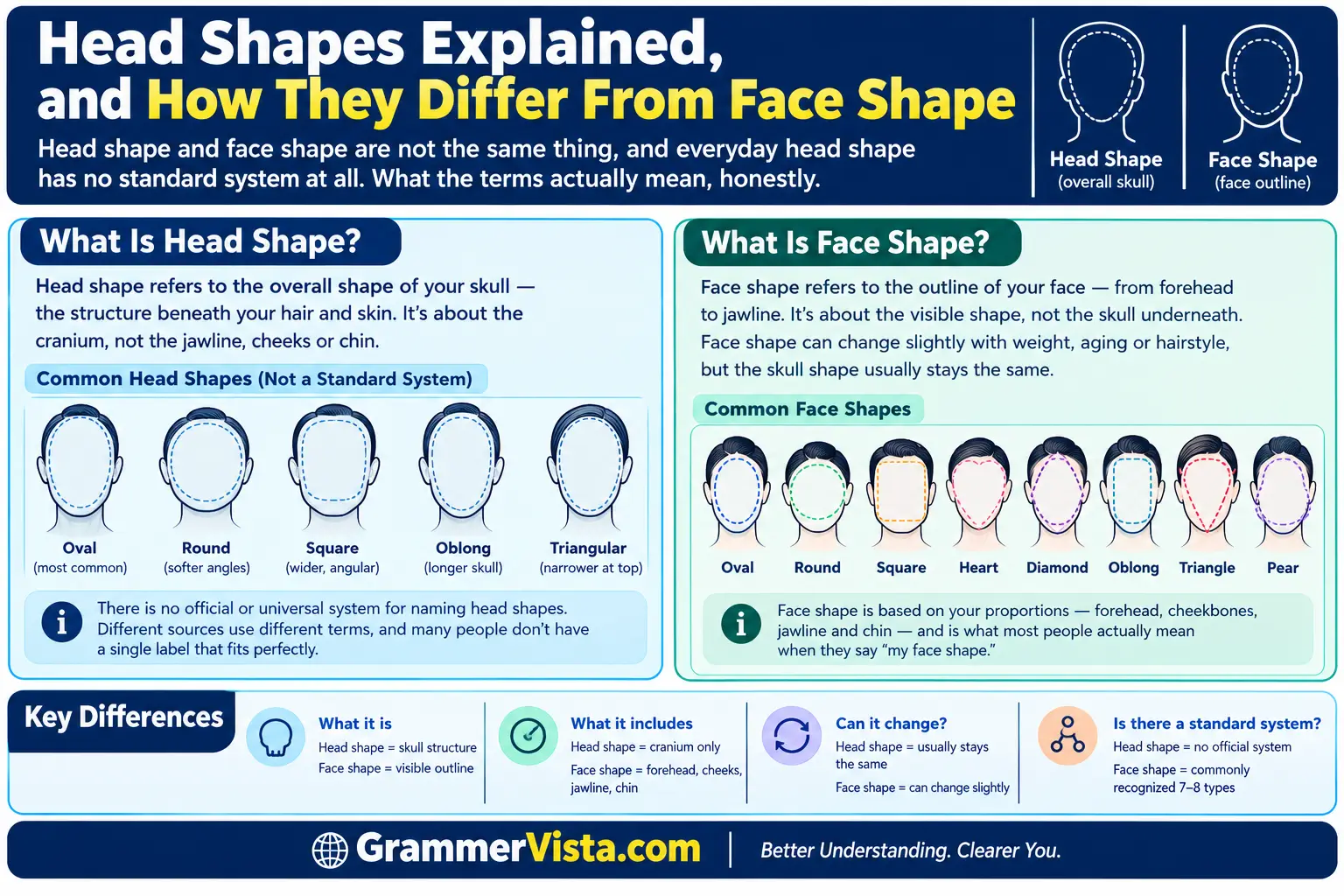
Head shape and face shape are two different things that happen to share confusing vocabulary. Face shape is the front view outline of your face, the system of 8 shapes covered across this site, decided by length, width and jaw angle.
Head shape is the 3D form of your skull, best seen from above or behind, and it is what actually determines how a hat fits, how a helmet sits, and how a very short haircut looks. If you came here to choose a haircut or a pair of glasses, the face shape chart is the page you actually want. This page is specifically about the skull.
If you are here because of a baby’s head shape, read this first. Infant skulls are soft, and a flattened area from consistent sleeping position is a real and common pediatric topic, not a styling one. That is a matter for your pediatrician, not a website. Nothing on this page is written for or intended to address an infant’s head shape, and it should not be used for that.
An honest note before anything else
Unlike face shape, where this site can at least point to consistent measurements, everyday head shape has no standard system at all. Barbers, helmet manufacturers and doctors each use their own vocabulary for describing the same skulls, and none of it is standardised the way face shape categories at least attempt to be. What follows are common, practical descriptions, not a medical or scientific classification.
The common adult head shape descriptions
| Description | What it means | Where it matters |
|---|---|---|
| Round | Width and length read close to equal when viewed from directly above | Helmet and hat fit, since a round head needs even room in every direction |
| Long or oval | Noticeably longer front to back than side to side. The most common adult pattern | The most forgiving shape for hat sizing, and the one very short haircuts sit most predictably on |
| Flat back | The rear of the skull reads flatter than average when felt or viewed from the side | Mainly relevant to how a very short buzz cut looks from behind, harmless on its own in adults |
| Pointed or peaked crown | The top of the skull rises to a subtle peak | Noticeable mainly with very short hair, where the peak can show through |
None of these are problems. They are simply descriptions of normal variation in adult skull shape, relevant mostly to how a very short haircut sits or how a helmet fits, not to health.
How to check your own head shape
Two low effort ways, since there is no tape measure equivalent to face shape here:
- Look down at a top view photo, taken with your phone held above your head, or ask someone to take one. This shows the round versus long distinction most clearly.
- Feel the back of your skull with a flat hand. A flatter feel toward the base suggests a flat back, a rounder feel suggests otherwise.
A barber cutting very short hair reads this in seconds by eye and touch while cutting, which is the main practical situation where it comes up at all.
Why this matters mainly for very short hair
At any length with real coverage, hair itself defines the outline people see, and head shape underneath matters very little. At a very short buzz or crop, there is nothing left to disguise the skull’s actual 3D shape, so a flat back or a pointed crown becomes visible in a way it never would at longer lengths. This is the one place where head shape has a genuine, practical styling consequence, separate from face shape entirely.
FAQs
What is the difference between head shape and face shape?
Face shape is the front view outline of your face, decided by length, width and jaw angle, which this site covers in full elsewhere. Head shape is the 3D form of your skull, best seen from above or behind, and it matters mainly for hat and helmet fit and for how very short haircuts sit. They are unrelated measurements that happen to share some of the same descriptive words.
What are the main types of head shape?
Common everyday descriptions include round (width and length close to equal from above), long or oval (noticeably longer front to back, the most common adult pattern), flat back, and a pointed or peaked crown. There is no standardised system for these, unlike face shape.
Does head shape affect which haircut suits me?
Mainly at very short lengths. Once hair has real length, it defines the outline itself and head shape underneath has little visible effect. For a buzz cut or very short crop, a flat back or a peaked crown can show through in a way longer hair would cover.
My baby has a flat spot on their head, what should I do?
Speak to your pediatrician. Persistent flat spots in infants are a real and common pediatric topic related to sleeping position, and it is treatable when addressed appropriately. This page and this site are not a source for that, and nothing here should be used in place of medical advice for an infant.
Is there a standard classification for head shapes?
No, not for everyday adult head shape. Barbers, helmet manufacturers, and doctors each use their own vocabulary for describing skull shape, and none of it is unified into one system, unlike face shape categories.
Reference on the anatomy discussed throughout: human head.