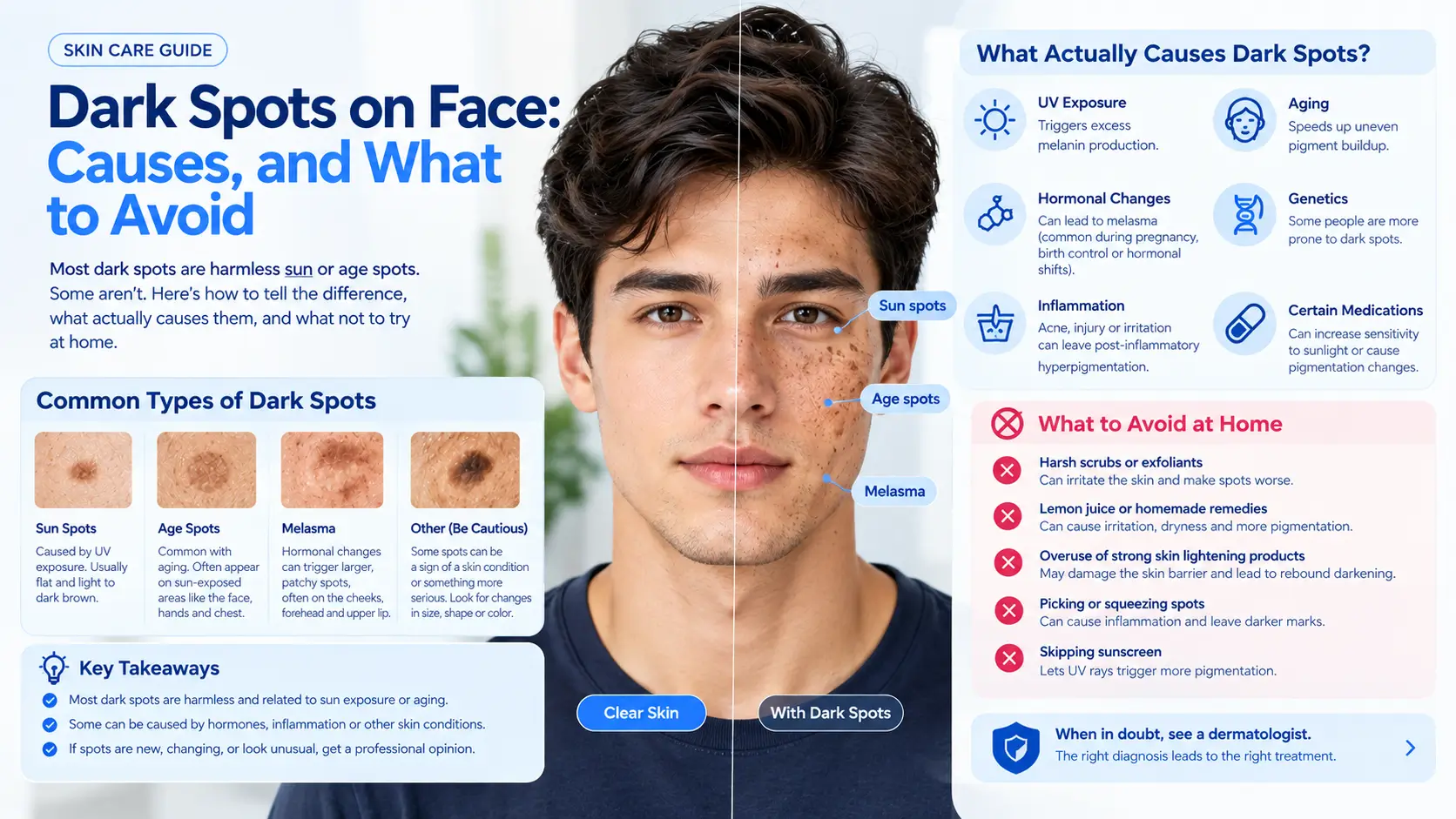
Dark spots on the face almost always come down to one thing happening under the skin: too much melanin being produced in one spot rather than evenly. What triggers that overproduction varies a lot, and the cause matters more than most guides suggest, since it changes both what actually helps and whether you should see someone before trying anything.
Quick answer:
Sun exposure is the single most common cause, followed by hormonal changes (melasma), natural aging (often called age or liver spots), and inflammation left over from acne or an injury. Most dark spots are harmless and don’t require treatment.
Some need a dermatologist’s evaluation first: new ones, growing, irregularly shaped, or unevenly colored, since those are also signs worth ruling out for anything more serious.
The common causes
| Cause | What’s actually happening |
|---|---|
| Sun exposure | UV light triggers melanin production as a protective response. Repeated exposure without protection is the most commonly cited cause of facial dark spots overall |
| Melasma (hormonal) | Hormonal changes, pregnancy, birth control, and some medications can trigger larger, often symmetrical patches, more common in women and often confused with simple sun spots |
| Age spots | Cumulative sun exposure over years shows up more visibly as the skin’s natural cell turnover slows with age |
| Post-inflammatory hyperpigmentation | Left over from acne, injury, or any skin inflammation. The mark isn’t scarring itself; it’s the skin’s pigment response to healing |
When to see a dermatologist before trying anything
This is worth reading before the next section, not after. Several dermatology sources are specific about this: some dark spots can resemble early skin cancer, and the only way to rule that out is an actual exam, not a guess from a description online.
See a dermatologist rather than starting home treatment if a spot is:
- New, or changing in size, shape, or color
- Irregular or uneven in its border, rather than a clean, consistent edge
- Growing noticeably over weeks or months
- Occurring alongside a personal or family history of skin cancer
Most facial dark spots are ordinary sun or age spots, and none of this applies. But this is exactly the kind of thing worth a quick professional look rather than assuming, since the visual difference between a harmless spot and something that needs attention isn’t always obvious without a proper exam.
What generally helps, and what a dermatologist may offer
Once something’s been confirmed as an ordinary sun spot, age spot, melasma, or post-inflammatory mark, the general categories of treatment dermatologists commonly use include:
- Topical treatments, prescription-strength retinoids or ingredients that slow melanin production, typically used under guidance since strength and skin tolerance vary a lot from person to person
- Chemical peels, which exfoliate the top layer of skin to encourage new, more evenly pigmented skin to surface
- Microdermabrasion, a similar resurfacing approach using a mildly abrasive tool rather than a chemical solution
- Laser or light-based treatments, generally reserved for more stubborn spots, and the option most likely to need a proper consultation first given the range of laser types available
None of these are written as instructions here on purpose. Strength, suitability, and safety all depend on the specific type of spot and skin tone, which is exactly what a dermatologist’s evaluation is for.
What to actively avoid
Multiple dermatology sources are specific about this, and it’s worth repeating clearly: lemon juice and abrasive home scrubs are commonly advised against, since they can irritate skin and make discoloration worse rather than better. Some skin-lightening products sold without proper regulation have been found to contain mercury, a genuinely toxic ingredient with real health risks, not just a skin concern. If a product doesn’t list its active ingredients clearly, that’s reason enough to skip it.
The one thing that actually prevents most of these
Since sun exposure is the leading cause, consistent daily sunscreen is the most commonly cited way to prevent new spots from forming and keep existing ones from darkening further. The best sunscreen for face guide covers what to actually look for, since not every sunscreen is built for everyday facial wear.
FAQs
Are dark spots on the face dangerous?
Most aren’t. Sun spots, age spots, melasma, and post-inflammatory marks are generally harmless. Some spots can resemble early skin cancer though, which is why new, changing, or irregularly shaped spots are worth a dermatologist’s evaluation rather than assuming.
What’s the difference between melasma and regular sun spots?
Melasma tends to appear as larger, often symmetrical patches and is driven mainly by hormonal changes, pregnancy, birth control, or certain medications. Sun spots are typically smaller, more scattered, and driven by cumulative UV exposure rather than hormones.
Can dark spots go away on their own?
Some fade gradually, particularly post-inflammatory marks left over from acne or minor injury. Sun spots and age spots are usually more persistent and generally need active treatment or fade very slowly if left alone.
Is it safe to use lemon juice on dark spots?
No, and several dermatology sources specifically advise against it. Lemon juice and other acidic home remedies can irritate skin and make discoloration worse rather than lightening it.
What ingredients should I avoid in skin-lightening products?
Mercury is the most serious one to watch for, and it has shown up in some unregulated lightening products. It’s a genuinely toxic ingredient, not just an ineffective one. If a product doesn’t clearly list its active ingredients, that’s reason enough to avoid it.
Reference to the underlying process discussed: hyperpigmentation.