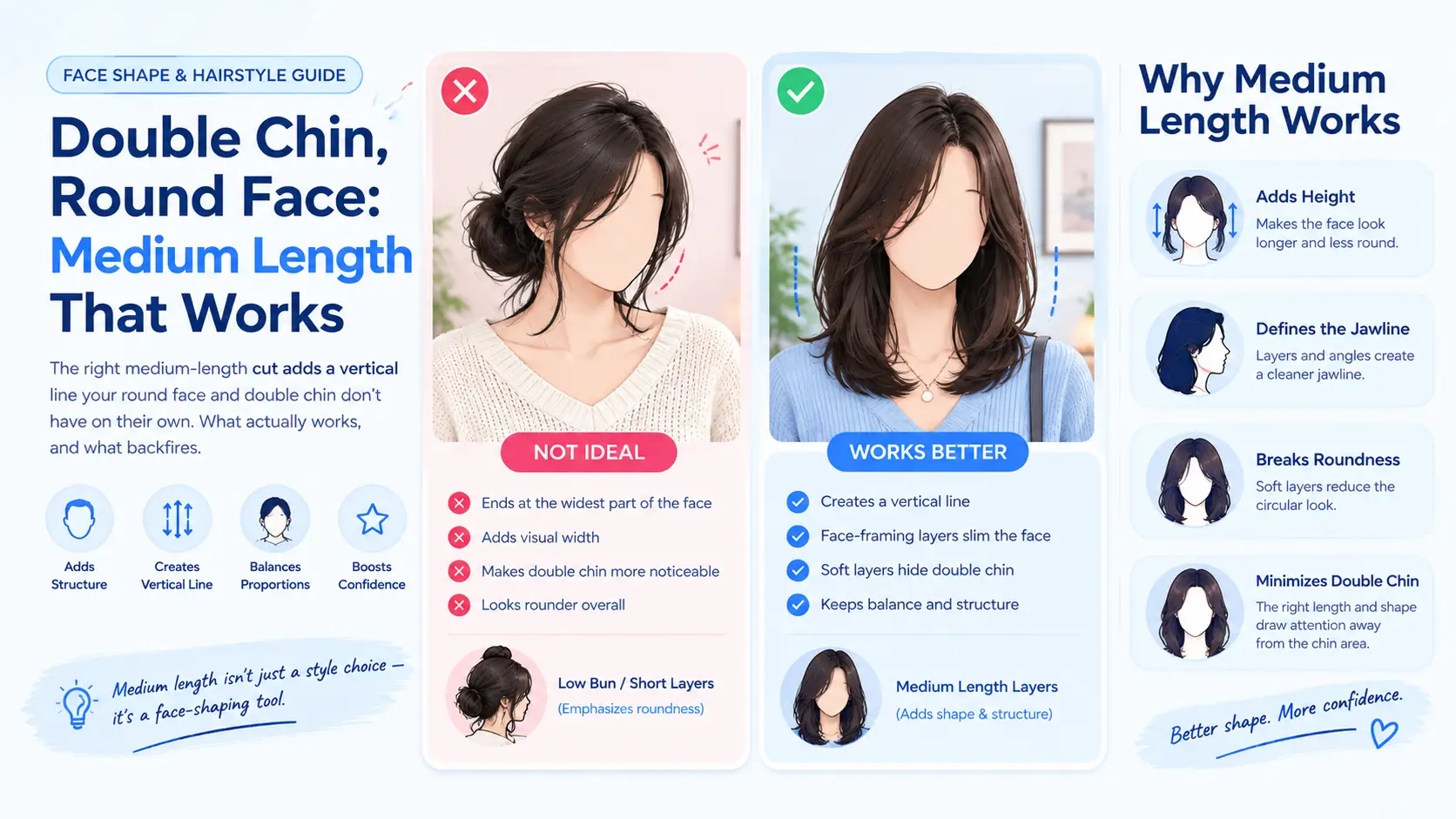
A round face and a fuller lower jawline share the same problem: neither one has a strong vertical line. Medium length is genuinely the easiest range to fix that in: longer than a chin-skimming bob, shorter than hair that just sits flat against the jaw.
Quick answer:
Layered cuts that fall past the chin, cut on an angle so the front pieces are longer than the back, do the most work. Add a side-swept fringe and soft waves, and the eye follows a diagonal line down and out instead of stopping at the jaw.
Blunt, straight, all-one-length hair at this exact range is the one thing to avoid, since it draws a horizontal line right where you don’t want one.
The cuts that work, and why
| Cut | Why it works |
|---|---|
| A-line lob, shorter in back | The angled front line is longer than the back, creating a diagonal your eye follows instead of a flat horizontal edge at the jaw |
| Layered medium cut, face-framing pieces | Layers starting around cheekbone height keep movement near the jaw without adding width there |
| Side-swept or curtain fringe | Pulls attention up and out toward the eyes rather than down toward the chin |
| Soft waves or texture | Movement reads as softness, not added width, the way pin-straight hair at this length tends to |
The instruction that matters most: ask for layers that start at or above the cheekbone, not at the jaw itself. Layers that begin right at jaw height add volume exactly where a fuller jawline doesn’t need it.
What to avoid, and why
- One-length, blunt-cut medium hair. A straight horizontal line ending right at or below the jaw frames it like a picture frame, the opposite of the goal.
- Thick, heavy, straight-across bangs. They add width across the widest part of the face rather than breaking it up.
- Heavy volume concentrated at the sides, level with the jaw. Any style that adds bulk right where the face is already fullest works against the diagonal-line goal.
A genuinely useful detail most guides skip
Where the layers start matters more than how many there are. Ask specifically for the shortest layer to sit at cheekbone height, not jaw height. That one instruction to a stylist does more than a vague “add some layers” request, and it’s the difference between a cut that elongates and one that just adds volume in the wrong place.
FAQs
What’s the best medium length haircut for a round face with a double chin?
A layered A-line lob, cut shorter in the back and longer toward the front, is the most consistently recommended option. The angled line creates a diagonal that draws the eye down and out rather than stopping flat at the jaw.
Should I get bangs with a round face and double chin?
Side-swept or curtain bangs work well, since they frame the face without adding width. Thick, straight-across bangs work against the goal, since they add a horizontal line right at the fullest part of the face.
Is medium length actually better than short or long for this?
It’s the easiest range to work with. Short cuts risk sitting right at the jawline and framing it. Long hair needs real texture and layering to avoid looking flat. Medium length has enough length to layer and angle without the upkeep long hair needs.
Do waves or curls help more than straight hair?
Generally yes. Texture reads as softness and movement rather than added width, which is why pin-straight, one-length hair at this exact range tends to be the look most guides recommend against.
Where should layers start for the most slimming effect?
At or above cheekbone height, not at the jaw. Layers that begin at jaw level add volume exactly where a fuller jawline doesn’t need more of it.
Once you’ve confirmed your face shape, the full round face hairstyle guide covers the complete range of lengths and cuts, and the round face shape guide explains the measurements behind the shape itself. Not sure round is the right starting point? The face shape detector confirms it from a photo in seconds.
Reference on the anatomy discussed: submental fat.
1 thought on “Double Chin, Round Face: The Medium-Length Cuts That Work”