Not exactly, and it’s worth knowing that before anything else here. Once collagen breaks down, nothing you eat or apply rebuilds the same fibers. What you can genuinely do is slow further loss and support your skin’s own, slower production of new collagen.
Quick answer:
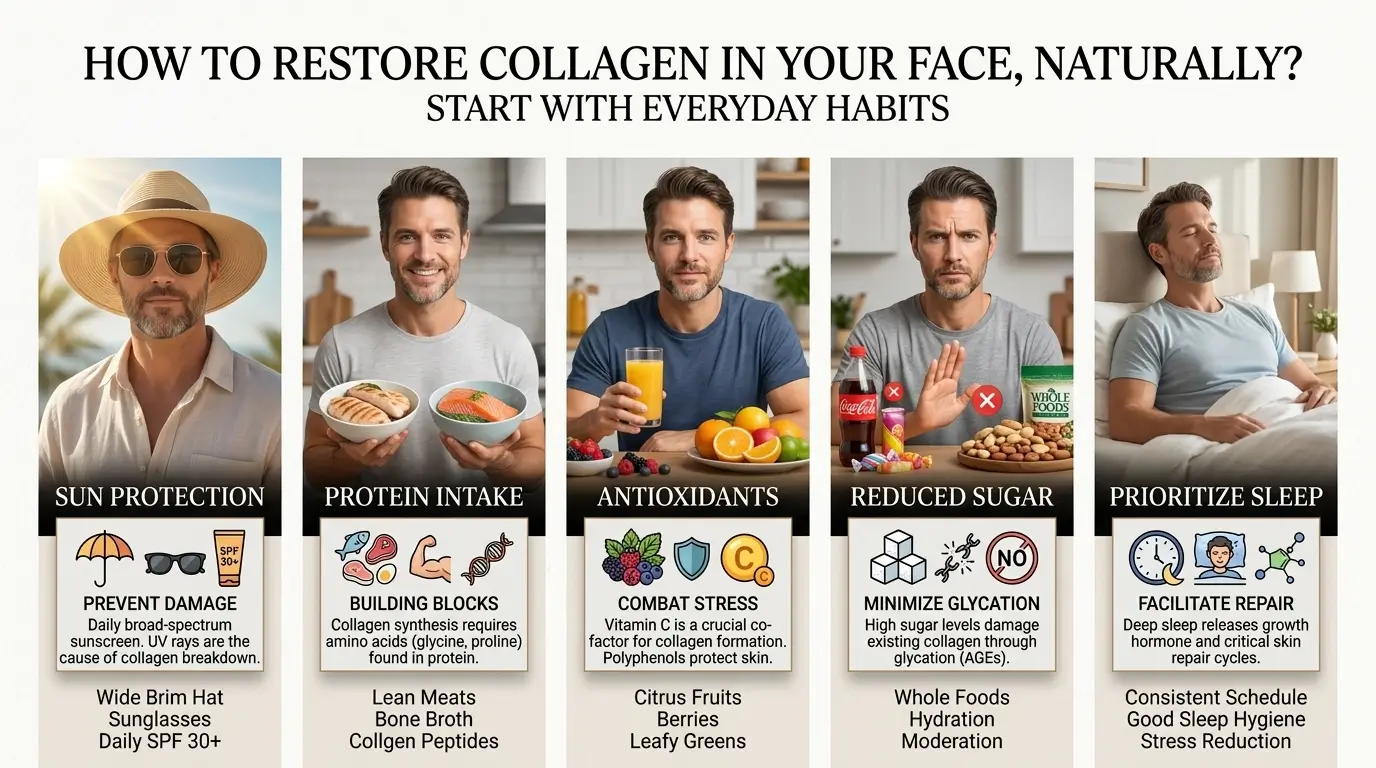
Sun protection is the single biggest lever, since UV exposure is the leading cause of collagen breakdown. Beyond that, diet, hydration, sleep, and not smoking all have real evidence behind them. Topical retinol and vitamin C serums are the two ingredients most consistently backed by research.
In-office treatments exist for more dramatic results, but that’s a dermatologist conversation, not a DIY project.
What Actually Breaks Down Collagen in the First Place
UV exposure is the most consistently cited cause across dermatology sources. Smoking, poor sleep, high sugar intake, and chronic stress all show up repeatedly too, though sun damage remains the biggest single factor by most accounts.
Age plays a role regardless of any of this. Collagen production naturally slows starting in your mid-to-late twenties, which is normal and not itself a sign anything’s gone wrong.
The Habits With Real Evidence Behind Them
- Daily sunscreen. Since UV damage is the leading cause of collagen breakdown, this is the most impactful single habit on this list. The best sunscreen for face guide covers what to actually look for.
- Vitamin C and protein in your diet. Vitamin C is a required cofactor for collagen synthesis, and protein supplies the amino acids collagen is built from. Citrus, berries, and leafy greens cover the vitamin C; most protein sources cover the rest.
- Not smoking. Smoking is consistently linked to accelerated collagen breakdown and is one of the more controllable factors on this entire list.
- Sleep. Poor sleep raises cortisol, which works against collagen production. Most sources point to 7 to 9 hours as the general target.
- Hydration. Its effect on collagen specifically is more modest than the other factors here, but it’s consistently mentioned and genuinely costs nothing to maintain.
What About Retinol and Vitamin C Serums?
These are the two topical ingredients with the most consistent evidence behind them for skin, out of everything sold as “collagen boosting.” Retinol speeds up cell turnover and signals skin to produce more collagen. Vitamin C serums support that same synthesis process from the surface.
Neither works overnight, and both take consistent use over months to show a real difference. If you’re new to retinol specifically, starting a few nights a week rather than daily reduces irritation while your skin adjusts.
When People Talk About “Restoring” Collagen, What Do They Actually Mean?
Often they’re describing in-office treatments: microneedling, laser resurfacing, radiofrequency, or injectables like Radiesse. These work by creating controlled, minor injury that triggers your skin’s healing and collagen-remodeling response.
These are genuinely effective for some people, but they’re medical or cosmetic procedures, not something to attempt at home. A dermatologist is who can assess which, if any, makes sense for your skin.
FAQs
Can collagen loss actually be reversed?
Not exactly. Existing broken-down collagen isn’t rebuilt, but you can slow further loss and support your skin’s own ongoing production through sun protection, diet, and consistent skincare habits.
What’s the single most effective thing I can do for collagen?
Daily sunscreen, since UV exposure is the most commonly cited cause of collagen breakdown in the first place. Everything else on this list matters, but this is the biggest single lever.
Do collagen supplements actually work?
The evidence is mixed and less consistent than for diet, sun protection, or topical retinol. Getting collagen-supporting nutrients, vitamin C and protein specifically, through food has more consistent backing across sources.
How long does it take to see a difference from these habits?
Months, not days. Retinol and vitamin C serums typically need consistent use over 8 to 12 weeks before a visible difference shows up, and that’s true of most of the lifestyle factors here too.
Are in-office collagen treatments worth it?
That depends entirely on your skin, your goals, and your budget, which is exactly why it’s a dermatologist conversation rather than something a general guide can answer for you.
Reference on the underlying protein discussed: collagen.