Quick answer:
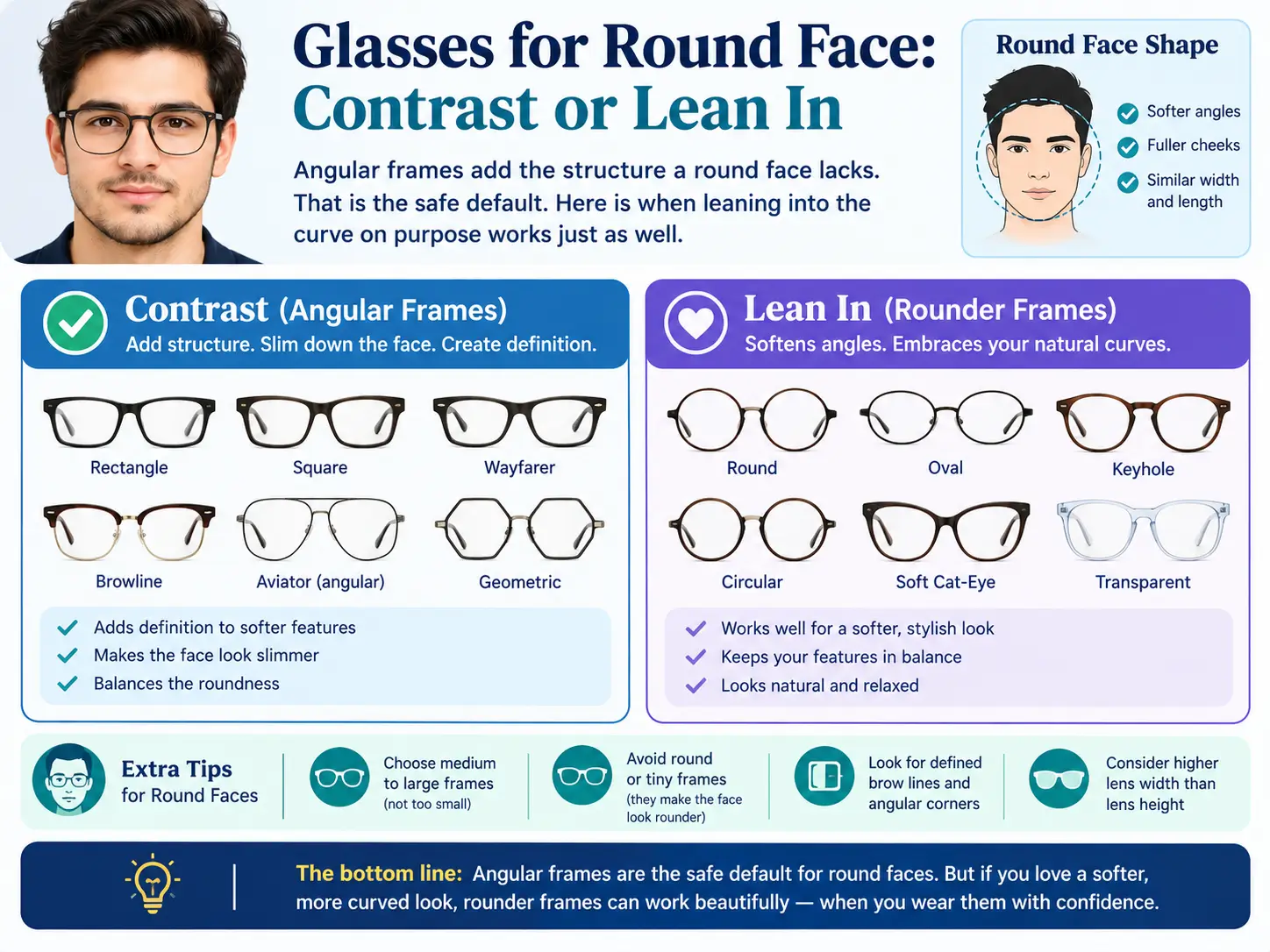
A round face has soft curves and close-to-equal width and height, with no sharp angles. Angular frames, rectangle, square, or geometric, add the contrast most guides recommend. A frame close to your own cheekbone width or slightly wider works best.
One thing most guides skip: oversized round frames in a bold, thick material can work too, by matching the curve on purpose instead of fighting it.
Confirm the shape first
Pull your hair back. Are your forehead, cheekbones, and jaw width all close to even, with no corner in the jaw and no length to spare? That is round. The face shape detector confirms it directly if you want the exact numbers.
Frames that work, and why
| Frame | Why it works |
|---|---|
| Rectangle | The most recommended shape across nearly every source checked. Horizontal width adds contrast, and the narrower vertical profile adds visual length |
| Square | Same contrast principle, slightly more compact. A defined, clean-edged square slims a fuller face |
| Geometric (hexagon, angular cat-eye) | Adds structure in a less classic, more fashion-forward way, without a plain rectangle or square outline |
| Browline | A thicker top edge with a lighter bottom draws the eye upward and adds a defined line the face otherwise lacks |
The width rule that matters more than shape: the frame should sit at or slightly past your cheekbones. A frame narrower than your face, or a very thin, delicate frame, tends to get lost rather than add the contrast you want.
The other option: lean into the curve
If you want a round frame anyway, size and material decide whether it works. A thick, bold, oversized round frame reads as a style choice rather than an accident, since its scale and visual weight do real work rather than quietly repeating your face’s curve. A small, thin, wire-rimmed round frame is the version to avoid, since it has no presence to make that argument.
What to avoid, and why
- Small or thin round frames. They repeat the curve without adding anything, and disappear on a fuller face.
- Frames narrower than your cheekbones. This makes the face look wider by comparison, the opposite of the goal.
- Very rounded, rimless styles. They soften a face that already has nothing but soft edges.
FAQs
What glasses suit a round face best?
Rectangle and square frames are the most consistently recommended, since their angles contrast with a round face’s curves. A frame at or slightly wider than your cheekbones works better than anything narrow or delicate.
Can a round face wear round glasses?
Yes, if the frame is oversized and made from a bold, thick material. That reads as a deliberate style choice. A small, thin round frame just repeats the face’s own curve without adding anything.
Do glasses make a round face look thinner?
Angular frames with real width, especially rectangles, can create that effect, since the horizontal line and defined corners add contrast that a plain curved frame does not.
What glasses should a round face avoid?
Small or thin round and oval frames, and any frame narrower than your own cheekbones. Both repeat the face’s existing softness rather than balancing it.
Is frame size or frame shape more important for a round face?
Both matter, but width is the detail most guides skip. A rectangle frame that is too narrow will not add the contrast a wider one does, even though the shape is correct.
Reference on the frame styles discussed: rectangle.
1 thought on “Glasses for a Round Face”