Quick answer:
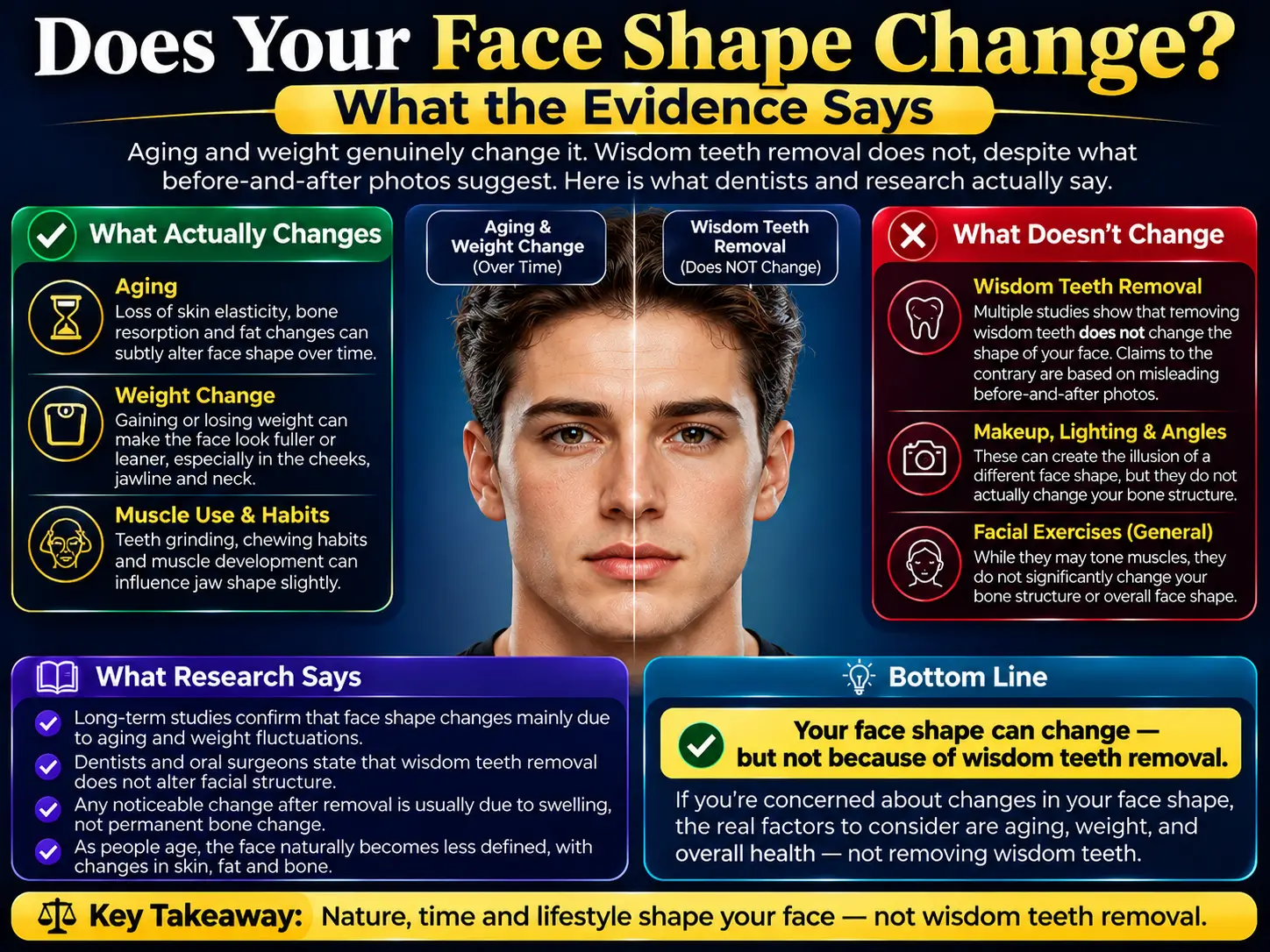
Yes, but not for the reasons most people assume, and not because of most of the specific things people search for. Aging, weight change, and craniofacial growth in childhood genuinely reshape a face. Wisdom teeth removal does not, despite how common that belief is, and dentists have been fairly consistent and clear about why.
Mouth breathing can affect facial development, but the well documented evidence is specific to children whose bone is still growing, not adults. This page goes through each claim searched most often, with what is actually known behind each one.
This is general information, not medical or dental advice, and nothing here should be used to diagnose yourself. If a health condition is genuinely changing your face, a doctor or dentist is the right person to ask, not a search result.
What genuinely changes your face shape
Aging
This is the most consistently documented cause, and it is not really about the bones changing shape so much as everything around them shifting. Fat pads in the face redistribute, and some lose volume with age, skin loses elasticity, and bone density can decrease slightly later in life.
The combined effect is a face that reads longer and less full over decades, which is a real, gradual reshaping rather than a myth.
Weight change
Also genuinely real and usually the most visible of any cause here. The face carries fat in the cheeks, jawline, and under the chin, and losing or gaining a meaningful amount of weight changes how full or defined those areas look, sometimes changing the overall silhouette a face shape calculator would measure.
Weight loss around the same time as another life change, wisdom teeth removal being a common one, is a frequent reason people credit the wrong cause for a face shape change they genuinely did experience.
Craniofacial growth, in childhood specifically
The face is not fully grown until roughly the late teens, and bone genuinely develops during that window in response to genetics, breathing patterns, and other growth factors.
This is the basis for the mouth breathing research below, and it matters that this window closes. What is true for a growing child’s developing bone is often not true for an adult’s already formed bone.
What does not, despite the searches
Wisdom teeth removal
This is the single most searched version of this question, and dental consensus is unusually clear and consistent: removing wisdom teeth does not change face shape. The reasoning is structural. Wisdom teeth sit in a section of the jaw called the dental alveolus, which is distinct from the basal jawbone that actually determines your jaw’s shape, so removing them does not touch the bone responsible for your outline.
What genuinely changes afterward is temporary swelling, which can make the face look slimmer as it resolves over one to two weeks, and often reduced eating during recovery, which can cause a small amount of real, if temporary, weight-related change. Both get misattributed to the extraction itself rather than to swelling going down or a few days of eating less.
Chewing gum
No credible evidence supports gum chewing meaningfully reshaping an adult jaw. Jaw muscles can develop some tone with heavy use, similar to any other muscle, but that is a very different claim from altering bone structure, and no research supports the second one.
Face yoga and jaw exercises for adults
Sometimes searched as “mewing.” These trends claim tongue posture and facial exercises can reshape an adult jaw. The growth-related research on tongue posture and jaw development is specific to children during active bone growth, covered above.
Applying the same claim to adults, whose facial bones have already finished growing, is not supported by the same evidence, and should be treated as a separate, much weaker claim.
The genuinely debated middle ground
Mouth breathing and “long face syndrome”
This one is real, but the evidence is more specific than most articles about it suggest. Orthodontic literature going back to the 1860s, and confirmed by modern systematic reviews, documents a real association between chronic mouth breathing in children and a vertical growth pattern sometimes called long face syndrome or adenoid facies, involving a narrower palate and increased facial height.
The mechanism is that nasal obstruction forces mouth breathing, which changes tongue posture, which can influence how the jaw and palate develop while a child’s bone is still growing.
Two honest caveats the research itself raises.
- First, recent reviews caution that identifying a mouth breather purely by looking at face shape is not a reliable diagnostic method on its own, correlation is not the same as a confirmed individual cause.
- Second, and more relevant if you are an adult reading this: the strong evidence here is about development, meaning it applies to growing children, not to reshaping a face that has already finished growing.
If you are an adult and suspect chronic mouth breathing, that is worth raising with a doctor or dentist for its own sake; sleep and airway health matter regardless of any effect on face shape, but treat any claim that it will change your adult face shape with real skepticism.
Braces, Invisalign, and palate expanders
These move teeth and, in growing children specifically, can influence jaw and palate development, which is exactly what a palate expander is designed to do during that growth window.
In adults, orthodontic treatment mainly repositions teeth within the jawbone rather than reshaping the jawbone itself, so the honest expectation for an adult is a changed bite and possibly a subtly changed lip line or profile from tooth movement, not a fundamentally different face shape.
Growing children and finished-growth adults are genuinely different cases here, and a lot of confusion comes from search results not separating the two.
Medical conditions
Some health conditions are genuinely associated with facial changes as one symptom among several, most commonly through weight gain, fluid retention, or inflammation. This is exactly the kind of claim that needs a doctor rather than a search result, since the right next step depends entirely on the individual and the actual underlying cause, which nothing on this page can determine.
If you have noticed a real, unexplained change in your face and you are concerned, that is worth raising with a doctor directly rather than searching for it.
What this means practically
If you are trying to change your face shape on purpose, the honest list is short: significant weight change is the most reliable lever available without medical intervention, and it affects fullness and definition more than the actual bone proportions a shape category is built on.
Cosmetic procedures like fillers or surgery are designed to change specific proportions directly and are a separate medical decision outside the scope of this page. Chewing gum, face yoga, and jawline exercises marketed at adults do not have credible evidence behind the specific claim of reshaping bone.
If you are not trying to change anything and just want to know your current shape accurately, that is a measurement question rather than a change question, and the face shape detector or the face shape calculator answer it directly.
FAQs
Can your face shape change naturally?
Yes, primarily through aging and weight change, both of which are well documented. Aging redistributes facial fat and reduces skin elasticity over years, and weight change directly affects fullness in the cheeks and jawline. Most other commonly searched causes, wisdom teeth removal and gum chewing especially, do not have credible evidence behind them.
Does wisdom teeth removal really not change your face shape?
Correct, and dental sources are consistently clear about why. Wisdom teeth sit in a part of the jaw that is not connected to the basal bone that determines your jaw’s actual shape, so removing them does not affect your outline. The slimmer look some people notice afterward comes from swelling resolving and, sometimes, a few days of reduced eating during recovery, not from a structural change.
Does mouth breathing change your face shape?
The evidence is real but specific: it is well documented in children whose facial bones are still growing, where chronic mouth breathing is associated with a narrower palate and a longer facial profile. In adults, whose bone growth has finished, the same claim is much less supported. Airway and sleep health are worth discussing with a doctor regardless of any effect on face shape.
Do braces or Invisalign change your face shape?
Mainly for children during a growth window, where orthodontic appliances like palate expanders can genuinely influence jaw development. In adults, braces and Invisalign primarily move teeth within an already-formed jawbone, so the realistic expectation is a changed bite and possibly a subtly different lip line, not a different face shape category.
How can I change my face shape naturally?
The most reliable lever without medical intervention is meaningful weight change, which affects facial fullness and definition more than anything else on this list. Claims that gum chewing, face yoga, or jaw exercises reshape an adult’s bone structure do not have credible evidence behind them specifically for adults.
Does your face shape change with age?
Yes, gradually and consistently, through fat pad redistribution, reduced skin elasticity, and some bone density loss over time. This is one of the two most reliably documented causes of face shape change, alongside weight change.
Reference on the field discussed throughout: orthodontics.